Does the Price of Asphalt Mixing Plants Really Determine the Long-Term Value of Equipment?
Across the road and bridge construction sector in Latin America, procurement decisions for asphalt production equipment have long been dominated by a single, deceptively simple question: What is the price? Project managers, fleet owners, and bidding contractors routinely scan listings for asphalt plant for sale, comparing quotation figures as though invoice value alone predicted lifetime performance. Yet after two decades of equipment evolution across Peru, Colombia, and Central America, a more complex truth has emerged. The initial asphalt plant for sale(planta de asfalto venta) price tag often masks—or magnifies—the true cost of ownership. A cheap plant purchased upfront can bleed value through chronic downtime, poor mix quality, and dismal resale prospects. Conversely, a thoughtfully configured mobile asphalt plant acquired at a moderate premium may deliver superior economic returns across multiple project cycles. This article examines why asphalt plant Peru contractors and their regional peers must look beyond the purchase invoice to assess genuine long-term equipment value.
Defining Value Beyond the Purchase Price
The Total Cost of Ownership Framework
Long-term value in asphalt production equipment is not a function of acquisition cost alone. It emerges from the interplay between capital expenditure, operating expense, productive output, and residual value retention. A low-cost asphalt plant for sale that consumes excessive fuel, requires frequent unscheduled repairs, and produces inconsistent mix temperatures imposes hidden penalties that accumulate rapidly.
Experienced asphalt plant Peru operators have documented that fuel efficiency differentials between premium and budget equipment can exceed 15 percent. Over a five-year period handling 200,000 tons of production, this gap alone may surpass the initial asphalt plant for sale price difference. The true value determinant is not what you pay to acquire the plant, but what the plant costs you per ton of acceptable mix delivered to the paver.
Price as Signal, Not Verdict
The quotation attached to any asphalt plant for sale should be interpreted as a signal requiring investigation, not a final verdict on suitability. A mobile asphalt plant(planta asfáltica móvil) offered at significantly below-market rates may indicate dated burner technology, inadequate structural corrosion protection, or a supplier lacking local service infrastructure.
Conversely, a mobile asphalt plant carrying a premium price often embeds engineering investments that directly enhance long-term value: thicker dryer drum shell plates, oversized bearing selections, and control systems designed for the voltage fluctuations common across Latin American project sites. Asphalt plant Peru contractors who have operated both budget and premium configurations consistently report that the premium units deliver lower lifetime costs despite higher initial asphalt plant for sale figures.
Operational Continuity as Value Driver
Downtime Economics
The single greatest destroyer of equipment value is unplanned production interruption. When an asphalt plant for sale is evaluated solely on price, insufficient attention is directed toward reliability engineering. A mobile asphalt plant that requires three weeks of annual unscheduled repair may appear attractively priced at acquisition, yet the consequent project delays, liquidated damages, and idle crew costs frequently exceed the initial equipment saving.
Asphalt plant Peru(planta de asfalto Perú) operations located in remote Andean or Amazonian regions face particularly severe downtime consequences. When a critical component fails and replacement requires seven days for parts delivery from Lima or overseas, the asphalt plant for sale price advantage evaporates entirely. Contractors servicing these geographies increasingly prioritize equipment robustness and parts availability over lowest invoice price.
Mix Quality and Rejection Costs
A mobile asphalt plant incapable of maintaining consistent temperature control or accurate aggregate gradation produces rejected loads. Rejected material represents not only wasted raw materials and fuel but also schedule disruption and repositioning expenses. A mobile asphalt plant configured with precise weighing systems and reliable burner modulation commands a higher asphalt plant for sale price but substantially reduces rejection rates.
Asphalt plant Peru quality records from major highway concessions indicate that premium-grade plants achieve rejection rates below 0.5 percent, while budget equipment operating under similar conditions frequently exceeds 3 percent rejection. For a project consuming 150,000 tons of mix, this differential represents 3,750 tons of wasted production—equivalent to approximately $300,000 in direct material and fuel losses alone.
Mobility Economics and Project Capture
The Strategic Advantage of Rapid Relocation
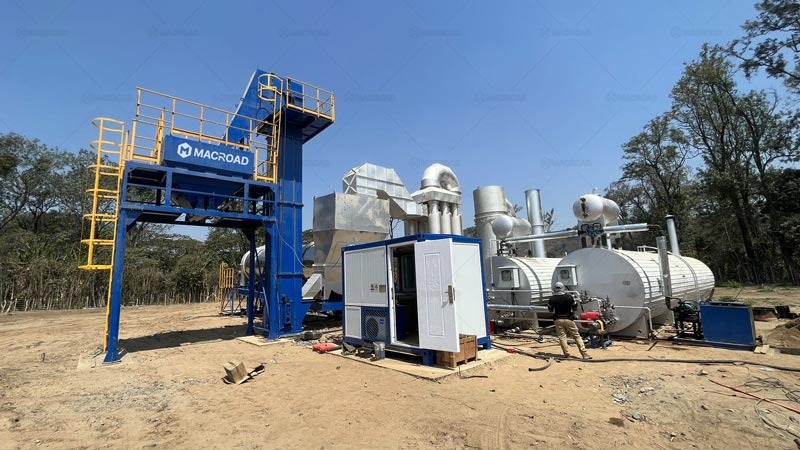
A mobile asphalt plant delivers value not only through production efficiency but through its capacity to pursue geographically dispersed opportunities. Contractors operating stationary installations are constrained to projects within economical haul distance of their fixed plant. Those owning a genuinely mobile asphalt plant can bid on contracts across multiple regions, sequentially relocating equipment as each assignment completes.
Asphalt plant for sale listings in Latin America increasingly feature mobile configurations precisely because contractors recognize this strategic optionality. A mobile asphalt plant that can be dismantled, transported, and recommissioned within five days enables pursuit of emergency reconstruction contracts, seasonal agricultural access roads, and municipal programs that would remain inaccessible to fixed competitors. This revenue-generation capacity is entirely absent from conventional price-based equipment evaluation.
Asphalt Plant Peru Case Experience
Several asphalt plant Peru contractors operating along the Panamericana Sur have demonstrated the value premium of mobility. One medium-sized enterprise acquired a containerized mobile asphalt plant at a asphalt plant for sale price approximately 22 percent higher than an equivalent-capacity stationary unit. Over thirty-six months, this plant served four distinct project locations spanning 600 kilometers of coastline. The contractor estimated that project capture enabled by mobility exceeded $1.8 million in revenue that would have been unattainable with fixed equipment. The mobile asphalt plant price premium was recovered within the first project relocation.
Residual Value and Fleet Sustainability
Depreciation Divergence
The relationship between asphalt plant for sale price and long-term value is nowhere more evident than in residual value performance. Budget equipment, often manufactured with lighter structural gauges and less robust componentry, depreciates rapidly. After five years of Latin American service conditions, such plants frequently command only 20 to 30 percent of original asphalt plant for sale value.
Conversely, well-specified mobile asphalt plant units from established manufacturers consistently retain 50 to 60 percent of their acquisition price after half a decade of productive service. Several asphalt plant Peru dealers report that premium mobile plants with documented maintenance histories sell swiftly in the used equipment market, often before formal listing. The residual value differential alone frequently offsets the original asphalt plant for sale price gap.
Tradability and Fleet Upgrading
A mobile asphalt plant that retains strong residual value provides contractors with an additional strategic instrument: the capacity to upgrade fleets without full capital reinvestment. By trading a well-maintained mobile unit after five to seven years of service, contractors apply the substantial residual value as down payment toward newer, more efficient configurations.
This fleet renewal pathway remains unavailable to owners of budget equipment that has depreciated to nominal scrap value. The original asphalt plant for sale price saving provides no contribution toward future competitiveness.
Hidden Cost Drivers in Low-Price Equipment
Structural Durability Under Load
Asphalt production imposes severe mechanical and thermal stresses. A mobile asphalt plant designed for genuine portability must incorporate structural reinforcements that permit repeated lifting and transport without frame distortion. Budget-priced asphalt plant for sale offerings often omit these reinforcements, resulting in progressive structural fatigue after three to four relocations.
Asphalt plant Peru operators servicing high-altitude sites report particular challenges with lightweight structural designs. Thermal cycling combined with rough transport roads accelerates crack propagation in inadequately braced components. The mobile asphalt plant price premium for structural robustness proves highly value-positive in these demanding environments.
Control System Longevity
Electronic control systems represent a significant cost component within any asphalt plant for sale. Budget equipment frequently incorporates consumer-grade electrical components unsuitable for the vibration, temperature extremes, and voltage instability characteristic of Latin American project sites. Control system failures are among the most common and disruptive failures reported by asphalt plant Peru operators.
Premium mobile asphalt plant configurations utilize industrial-rated PLC components, sealed enclosures, and enhanced surge protection. While these specifications elevate asphalt plant for sale price, they extend mean time between failures from months to years. For contractors measuring value through production reliability, this investment proves indispensable.
Supplier Capability as Value Component
Technical Support Infrastructure
The asphalt plant for sale transaction is incomplete at the point of payment. True value delivery continues through commissioning support, operator training, spare parts availability, and responsive troubleshooting. A mobile asphalt plant acquired from a supplier with established Latin American service infrastructure delivers materially higher long-term value than an identical plant purchased at lower price from a supplier lacking regional presence.
Asphalt plant Peru contractors increasingly audit supplier capabilities before evaluating asphalt plant for sale quotations. They assess parts warehousing in-country, technician deployment response times, and documentation quality in Spanish. These factors, invisible on the equipment invoice, fundamentally determine whether the mobile asphalt plant contributes to or detracts from operational performance.
Commissioning Quality
The transition from asphalt plant for sale listing to productive installation represents a critical value inflection point. Suppliers who invest in structured commissioning procedures—verifying burner calibration, testing interlock functionality, confirming material flow characteristics—deliver plants that achieve rated capacity rapidly. Suppliers who delegate commissioning to inexperienced local representatives, or who provide only remote guidance, prolong the period during which the mobile asphalt plant operates below specification.
This commissioning quality differential is rarely reflected in the asphalt plant for sale price yet directly impacts first-year productivity and operator confidence. Several asphalt plant Peru procurement managers now mandate detailed commissioning protocols within purchase agreements, recognizing that proper startup conditions lifetime equipment value.
Lorem ipsum dolor sit amet, consectetur adipiscing elit, sed do eiusmod tempor incididunt ut labore et dolore magna aliqua.
Strategic Implications for Latin American Contractors
Develop Total Cost Modeling Capability
Contractors must institutionalize total cost of ownership modeling before engaging asphalt plant for sale suppliers. This requires estimating fuel consumption differentials, forecasting maintenance intervals, quantifying rejection rate impacts, and projecting residual values. Organizations lacking this analytical capability remain vulnerable to superficially attractive asphalt plant for sale prices that conceal unfavorable lifetime economics.
Prioritize Configuration Over Price
Within any mobile asphalt plant category, configuration decisions exert greater influence on long-term value than the asphalt plant for sale invoice. Burner selection, baghouse specification, control system architecture, and structural design all determine whether the plant delivers acceptable operating cost and reliability. Contractors who specify equipment based on production requirements and operating environment, then negotiate price within that specification, consistently outperform those who select solely on asphalt plant for sale quotation.
Verify Supplier Substance
Latin American contractors should rigorously evaluate supplier capabilities before committing to asphalt plant for sale transactions. This includes visiting demonstration facilities, contacting reference customers operating identical mobile asphalt plant configurations, and auditing local parts inventory. Suppliers unwilling to substantiate their service infrastructure likely cannot support long-term equipment value realization.
Recognize Mobility as Strategic Asset
For contractors serving heterogeneous project portfolios, mobile asphalt plant capability should be evaluated not merely as production equipment but as competitive differentiator. The capacity to pursue dispersed contracts, respond to emergency works, and redeploy assets in response to market opportunities delivers value that transcends conventional production cost analysis. This strategic dimension must inform asphalt plant for sale evaluation.
Value Beyond the Invoice
The relationship between asphalt plant for sale price and long-term equipment value in Latin America is neither linear nor reliably positive. Low purchase prices frequently precede high total costs, while premium-priced mobile asphalt plant configurations often demonstrate superior lifetime economics through fuel efficiency, reliability, mix quality, residual value retention, and strategic flexibility.
Asphalt plant Peru contractors and their regional peers who have matured beyond price-centric procurement recognize that genuine value resides not in the invoice but in the equipment's capacity to produce acceptable mix reliably, to relocate economically, and to retain worth across multiple project cycles. The asphalt plant for sale quotation is merely the entry point to a multi-year value relationship—one determined far more by specification integrity, supplier capability, and operational discipline than by the initial transfer price. In the complex, opportunity-rich infrastructure environment of contemporary Latin America, this distinction separates contractors who build durable productive capacity from those who perpetually chase the illusion of the bargain.
Lorem ipsum dolor sit amet, consectetur adipiscing elit, sed do eiusmod tempor incididunt ut labore et dolore magna aliqua.
Post a comment