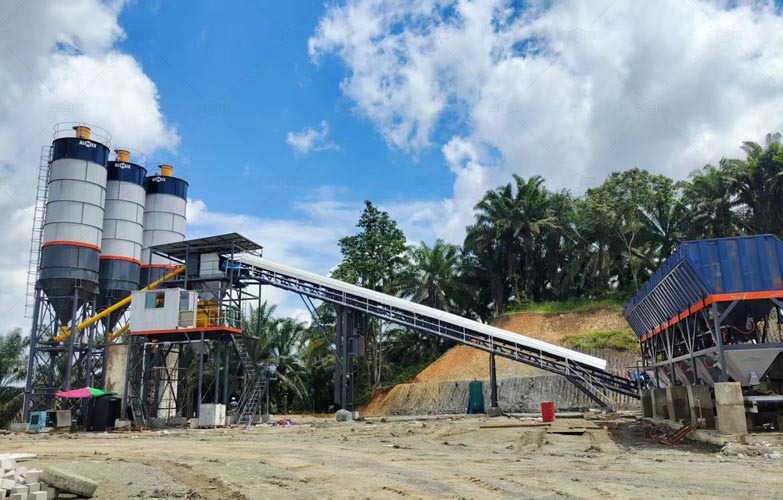
How Eco-Friendly Concrete Plants Help Peru Meet Environmental Regulations
Peru has recently strengthened environmental regulations for construction projects, requiring stricter compliance for air emissions, water management, and noise levels. Contractors must now demonstrate that their operations minimize environmental impact to pass Environmental Impact Assessment (EIA) certification. For companies evaluating a concrete plant for sale in Peru(venta de planta de concreto en Perú) or upgrading existing systems, investing in environmentally friendly equipment has become a strategic necessity. Modern concrete mixing plant technology not only supports regulatory compliance but also reduces operational costs and improves public perception.
Understanding Peru's Environmental Regulatory Landscape
The new framework emphasizes sustainable practices throughout the construction process. Compliance is mandatory for large-scale infrastructure projects, urban development, and industrial facilities.
Key Environmental Requirements
-
Dust and Particulate Control: Cement dust and fine aggregates must be managed with collection and suppression systems.
-
Water Management: Efficient water recycling and treatment prevent contamination of nearby rivers and groundwater.
-
Noise Reduction: Construction equipment must meet decibel limits, especially in urban and sensitive ecological zones.
Companies that fail to comply may face project delays, fines, or denial of EIA certification. Integrating modern concrete mixing plant technology can help mitigate these risks.
Regional Considerations
While the regulations apply nationally, contractors in regions bordering concrete plant Bolivia operations or cross-border projects often adopt similar standards to align with international environmental expectations.
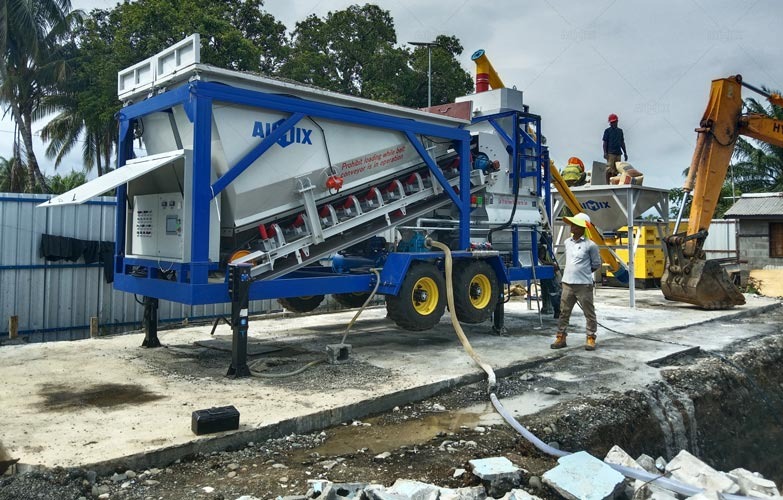
Features of Environmentally Friendly Concrete Plants
Modern eco-friendly plants incorporate several key design features to reduce environmental impact while maintaining productivity.
Dust and Emission Control
-
Closed Aggregate Storage: Minimizes airborne dust during loading and transfer.
-
Baghouse Filters and Cyclones: Capture cement and fly ash particles before release into the atmosphere.
-
Automated Feeding Systems: Reduce spillage and dust generation during batching.
Water Recycling and Management
-
Slurry and Washwater Treatment: Recycles water from mixer cleaning and truck washing.
-
Closed-Loop Systems: Reduce freshwater consumption while maintaining consistent mix quality.
-
Monitoring Systems: Track water usage and ensure compliance with regulatory limits.
Energy Efficiency and Noise Reduction
-
Variable Frequency Drives (VFD): Optimize motor speeds to lower energy use.
-
Soundproofed Enclosures: Reduce operational noise, particularly in densely populated areas.
-
Optimized Material Flow: Minimizes unnecessary movement, lowering both energy and noise.
Operational Benefits Beyond Compliance
Adopting environmentally friendly concrete mixing plant(planta hormigonera) systems provides operational advantages beyond meeting regulations.
Cost Savings
-
Reduced water consumption lowers utility bills.
-
Less dust and spillage reduce material loss.
-
Energy-efficient motors reduce electricity costs.
Improved Project Efficiency
-
Automated control systems improve batching accuracy and consistency.
-
Reduced maintenance from cleaner, enclosed systems ensures longer operational uptime.
Enhanced Corporate Image
-
Demonstrating commitment to sustainability improves relationships with regulatory bodies and local communities.
-
Environmentally responsible operations can be a competitive advantage in bidding for government projects.
Selecting the Right Plant for Regulatory Compliance
When evaluating a concrete plant for sale in Peru, contractors should consider the following:
Compliance-Oriented Features
-
Dust suppression and filtration systems
-
Water recycling capabilities
-
Energy-efficient equipment and low-noise operation
Capacity and Application
-
For urban or high-traffic road projects, compact plants with automated controls are ideal.
-
Larger infrastructure projects may require higher-capacity plants capable of continuous batching while maintaining environmental standards.
Cross-Border Considerations
-
Projects near Bolivia or other neighboring countries may benefit from selecting a plant compliant with both Peruvian and international standards, aligning with practices at concrete plant Bolivia sites.
Lorem ipsum dolor sit amet, consectetur adipiscing elit, sed do eiusmod tempor incididunt ut labore et dolore magna aliqua.
Case Study: Urban Road Project in Lima
A mid-sized contractor purchased an eco-friendly concrete plant for sale in Peru to support a city road upgrade. Features included a closed aggregate system, water recycling, and soundproofing. During project execution:
-
Dust emissions were reduced by 90% compared with older plants.
-
Water recycling allowed the plant to operate continuously without exceeding municipal water limits.
-
Noise levels remained within regulatory limits, avoiding complaints from nearby residents.
The project achieved timely EIA certification approval and improved community perception, demonstrating the practical value of investing in sustainable concrete technology.
Best Practices for Contractors
Contractors should adopt a structured approach to environmental compliance:
-
Evaluate Local Regulations: Understand national and regional requirements for dust, water, and noise.
-
Select Environmentally Friendly Equipment: Prioritize plants with dust collection, water recycling, and energy-efficient designs.
-
Train Staff on Eco-Friendly Operations: Proper operation reduces waste, maintains compliance, and extends equipment life.
-
Monitor and Record Performance: Automated logging of emissions, water usage, and energy helps with EIA reporting and audits.
-
Consider Long-Term ROI: While initial investment in eco-friendly equipment may be higher, savings in fines, water, energy, and maintenance often offset the upfront cost.
Aligning Sustainability with Project Success
Peru’s updated environmental regulations are reshaping construction project planning. Companies that integrate modern, environmentally friendly concrete mixing plant technology not only secure EIA certification but also gain operational efficiency and public trust. Whether purchasing a concrete plant for sale in Peru or collaborating with regional plants, including concrete plant Bolivia, aligning operations with sustainability standards is increasingly a prerequisite for successful project execution.
By investing in eco-friendly concrete batching solutions, contractors can achieve compliance, reduce costs, and support Peru’s long-term infrastructure development goals while maintaining high-quality concrete output and operational efficiency.
Lorem ipsum dolor sit amet, consectetur adipiscing elit, sed do eiusmod tempor incididunt ut labore et dolore magna aliqua.
Post a comment