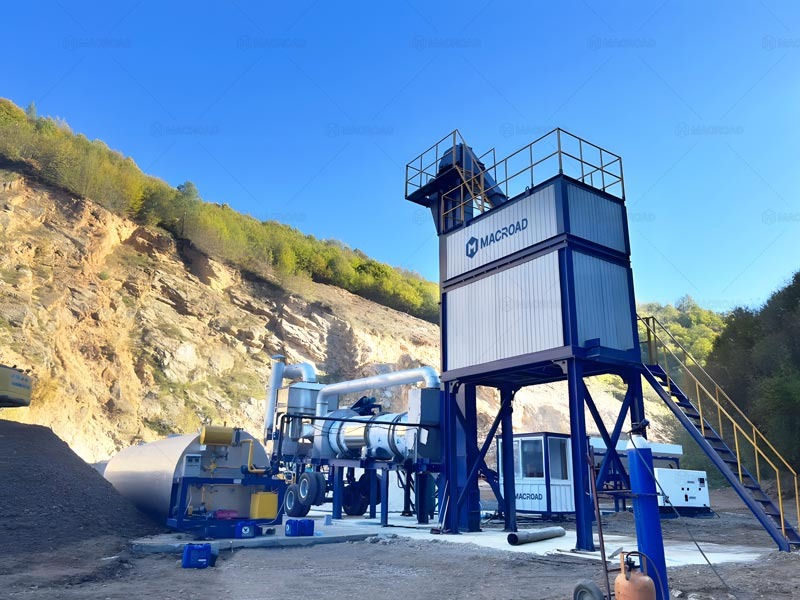
Why the Latin American Market Prefers Mobile Asphalt Mixing Plants?
Across the diverse and dynamic landscape of Latin America, from the expansive Amazon basin to the rugged Andean highlands, the demand for robust and flexible road infrastructure is constant. In this context, the choice of production equipment is not merely a technical decision but a strategic one that impacts project viability, cost, and timeline. A clear and prevailing trend has emerged: a strong market preference for mobile asphalt plant technology over traditional stationary setups. This preference is not incidental but is deeply rooted in the unique economic, geographic, and logistical realities of the region. The driving force behind this choice can be summarized in one word: flexibility. The inherent agility of a mobile asphalt plant provides contractors and government agencies with a critical tool to navigate the complexities of Latin American construction, turning logistical challenges into manageable operational plans.
The Core Driver: Unmatched Construction Flexibility
In construction, flexibility translates to the ability to adapt to changing conditions, optimize resource deployment, and mitigate unforeseen risks. A stationary plant, once erected, becomes a fixed point in the logistics network. A mobile asphalt plant, by contrast, is an asset that can be strategically repositioned. This fundamental difference manifests in several key advantages that directly address regional pain points.
Conquering Logistical and Geographic Challenges
Latin America's terrain is often a contractor's greatest adversary. Mountainous regions, vast rural areas with poor existing road networks, and geographically linear projects like highway corridors make centralized mixing economically punitive.
- Reducing Critical Haul Distances: Hot mix asphalt has a limited time window for optimal placement and compaction. Long haul times from a distant stationary plant lead to mix cooling, resulting in poor density, segregation, and premature pavement failure. A mobile asphalt plant(planta asfaltica movil) can be set up directly within or adjacent to the project site, slashing haul times to minutes. This ensures consistent delivery of high-temperature, workable mix, which is the single most important factor for achieving long-lasting pavement quality.
- Accessing Remote Project Sites: Many vital infrastructure projects aim to connect isolated communities or develop remote industrial areas. Transporting a stationary plant to these locations is often impractical. A trailer-mounted mobile asphalt plant, however, can be transported in modules along existing roads and assembled on relatively compact, unprepared ground, bringing production capability to the most challenging locations.
- Following the Project Path: For linear projects extending over dozens or hundreds of kilometers, the ability to "leapfrog" the production unit is invaluable. Instead of a constantly increasing haul radius from a fixed point, a mobile asphalt plant can be relocated in stages, maintaining an optimal and consistent production-to-paving distance throughout the project lifecycle. This mobility directly controls one of the largest variable costs: fuel for haul trucks.
Enhancing Economic and Operational Efficiency
Beyond solving geographic problems, the flexibility of a mobile unit creates tangible economic benefits that resonate in a cost-conscious market.
Optimizing Capital Deployment and Project Bidding
For many contractors, especially small to medium-sized enterprises, the capital investment in a permanent stationary facility is prohibitive and risky. A mobile asphalt plant represents a lower barrier to entry and a versatile asset that can be deployed across multiple, disparate projects over its lifetime. This flexibility makes contractors more competitive in bidding for various projects, from urban street rehabilitation to rural road paving. The plant becomes a revenue-generating tool that can be moved to where the work is, maximizing its utilization rate.
Improving Responsiveness and Reducing Overheads
Market demands and project schedules can change rapidly. The ability to demobilize, relocate, and recommission a plant within days, rather than weeks or months, allows contractors to respond to new opportunities or urgent repair works with remarkable speed. Furthermore, site-specific overheads—such as long-term land leasing for a stationary plant—are minimized. The mobile asphalt plant requires only temporary space, aligning costs directly with active production periods.
Adapting to Varied Project Scales and Scopes
The Latin American market encompasses a wide spectrum of projects, from mega-highways to community access roads.
The Ideal Solution for Small to Medium Projects
Not every project requires a 300-ton-per-hour stationary giant. For municipal works, residential development, or patchwork rehabilitation, a compact mobile asphalt plant with a capacity of 80-160 tons per hour is often the perfect fit. It provides sufficient output without the excess capital and operational cost of an oversized facility. Its smaller footprint allows it to fit in constrained urban lots or environmentally sensitive areas where a large plant would be impossible to permit.
Enabling Phased and Emergency Construction
Large-scale projects are often built in phases due to funding cycles or land acquisition schedules. A mobile asphalt plant can be seamlessly moved from one completed phase to the next. Similarly, in the aftermath of natural disasters like landslides or floods, which are not uncommon in the region, rapid deployment of a mobile asphalt plant is crucial for emergency road repairs to restore critical access for communities and relief efforts.
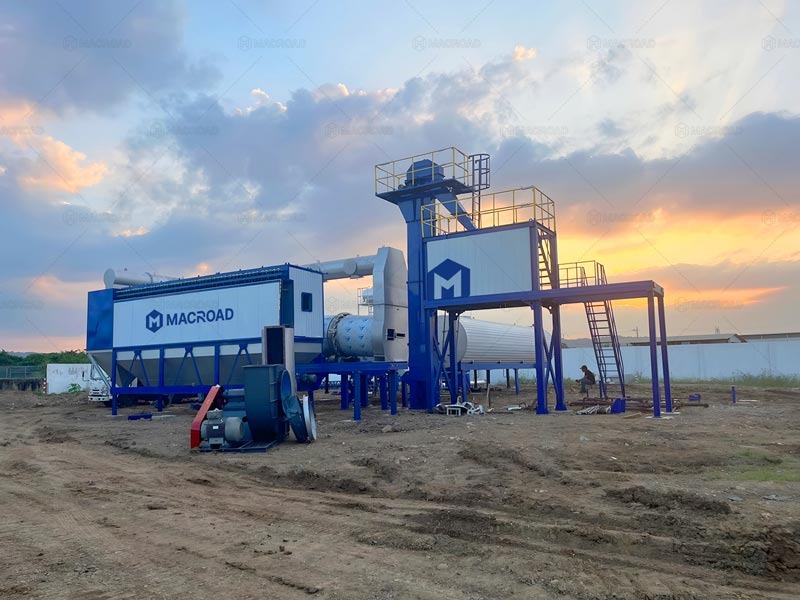
Key Considerations for Successful Implementation
To fully leverage the flexibility of a mobile asphalt plant, strategic planning is essential.
Selecting the Right Mobile Configuration: "Mobile" can range from modular units requiring some disassembly to fully trailer-mounted plants that roll on and off a site. The choice depends on the expected frequency of relocation and the available transport infrastructure.
Strategic Site Planning: Even a mobile plant needs a well-planned setup. Considerations include stable, level ground, efficient aggregate and binder supply logistics, environmental controls for dust and runoff, and proper access for haul trucks.
Investing in Operator Expertise: The flexibility of the equipment must be matched by skilled operators who can manage the unique aspects of mobile production, including rapid setup/teardown, calibration after moves, and maintaining quality across varying site conditions.
The Verdict: Flexibility as a Competitive Necessity
The pronounced preference for mobile asphalt plant technology in Latin America is a rational market response to a challenging operating environment. The flexibility it offers is not a luxury but a necessity for overcoming the region's distinctive hurdles of distance, terrain, and diverse project demands. By providing a solution that enhances logistical control, improves economic efficiency, and adapts to any project scale, the mobile asphalt plant has cemented its role as the preferred tool for building and maintaining the connective tissue of Latin American development. For contractors and agencies looking to build better roads faster and more cost-effectively, embracing this mobile flexibility is not just a choice—it is a strategic imperative for success.
Lorem ipsum dolor sit amet, consectetur adipiscing elit, sed do eiusmod tempor incididunt ut labore et dolore magna aliqua.
Lorem ipsum dolor sit amet, consectetur adipiscing elit, sed do eiusmod tempor incididunt ut labore et dolore magna aliqua.
Post a comment